“我们用三个圈筛选机会:一是看头部客户需求,二是看创始团队有没有能力禀赋满足客户需求,三是看市场 momentum(势能)。
(文|出海参考,作者|王璐,编辑|罗文琴)Nextfin News — On July 22, latest research from Omdia showed that despite total market shipments dropping by over ten percent in the second quarter, Vivo—excluding its iQOO sub-brand—maintained its top position in the Indian smartphone market with 6.3 million units shipped. Yet despite its strength in the market, Vivo was unable to keep full control over its manufacturing plants in India. There is an unwritten law in the corporate world that market share acts as a moat and scale brings bargaining power. But in India, Vivo has just seen that principle turned on its head—and in a remarkably brutal fashion. On July 9, an official approval was finally granted. Dixon Technologies announced to the stock exchange that Vivo India received a clearance letter issued on July 8 by India’s Department for Promotion of Industry and Internal Trade. Under this approval, the manufacturing operations Vivo built over twelve years in India will formally be folded into a joint venture controlled fifty-one percent by a local partner. According to industry analyses, the new entity has a paid-up capital of just fifty million rupees—around three and a half million yuan—yet it is taking over a mega-factory designed for an annual capacity of over one hundred million units and backed by a workforce of more than ten thousand employees. Viewed in isolation, this transaction reads like a story of loss. But when placed back into the context of Vivo’s global footprint, its true nature changes entirely. India remains Vivo’s largest overseas market, ranking first in 2025 with 32.1 million shipments and a twenty-one percent market share, accounting for roughly one-third of the brand's total global volume. Overseas operations already contribute more than half of Vivo's global revenue, with targets set to raise that share to sixty percent this year and seventy percent by 2027. This shift in India does not merely affect a single regional market; it alters the structural load-bearing pillar of Vivo’s entire global strategy. With the Indian chapter coming to a close, Vivo now faces far more practical questions about its future: What exactly did this equity restructuring change, and how will the brand navigate its next phase of globalization? A Three-and-a-Half-Million Yuan Outlay for a Three-Hundred-Billion Revenue Business By securing a fifty-one percent controlling stake, Dixon leveraged its position to capture a cash cow with an annual revenue potential estimated between two hundred fifty billion and three hundred billion rupees—roughly twenty-one billion to twenty-five billion yuan. This revenue guidance originates directly from Dixon’s own management team. As early as May, Dixon founder Sunil Vachani revealed that the joint venture would handle approximately two-thirds of Vivo’s smartphone sales in India, representing over twenty million units annually. JPMorgan further projects that the joint venture will add around eleven million smartphone shipments in fiscal year 2027, scaling up to approximately twenty-two million units annually across fiscal years 2028 and 2029. From India's perspective, this outcome represents a decisive policy victory. Looking back at Vivo’s expansion abroad, its capital deployment in India consisted of substantial physical investments. According to an official press release issued by Vivo India in April 2023, the company outlined a total investment plan of seventy-five billion rupees. The first phase called for thirty-five billion rupees by the end of 2023, of which twenty-four billion had already been allocated alongside plans to inject an additional eleven billion rupees by year-end. The new facility in Greater Noida, Uttar Pradesh, spans roughly 169 acres—a site acquired back in 2018 that officially went into operation in mid-2024. It currently holds an annual production capacity of sixty million units, with plans to double that figure to one hundred twenty million upon full completion, rivaling the footprint of Samsung’s largest manufacturing plant in the country. By 2018, Vivo's earlier facility was already generating a monthly output of around one million units while employing nearly ten thousand local workers. What do these figures truly signify? They demonstrate that Vivo was never just a consumer brand in India; it had built an end-to-end manufacturing system, a local supply chain, and a massive employment ecosystem. The company replicated its battle-tested Chinese ground-sales model across India, extending from major metropolitan shopping centers down to rural retail shops across roughly seventy thousand touchpoints. It even transformed India into an export hub, shipping Indian-made smartphones to Thailand and Saudi Arabia for the first time in 2022, with export targets exceeding one million units in 2023. Yet after 2024, every one of these capital investments transformed into a distinct disadvantage at the negotiating table. Faced with mounting regulatory pressure, Vivo initiated discussions in 2024 with major domestic players including Tata Group, Murugappa Group, and Dixon Technologies to explore joint ventures or contract manufacturing options, though early negotiations stalled. In December 2024, Vivo signed a non-binding term sheet with Dixon Technologies, initiating a protracted government approval process that dragged on for nineteen months. Upon closing, the joint venture will purchase selected manufacturing assets from Vivo for an undisclosed amount, sign dedicated production and packaging agreements with Vivo India, handle a substantial share of its OEM orders, and retain the flexibility to manufacture for third-party brands down the line. With an initial capital commitment of just 25.5 million rupees, Dixon gains access to established assembly lines, skilled workers, an integrated supply chain, and guaranteed orders from a brand selling over thirty million phones a year. In return, Vivo retains only the right to continue selling smartphones in the Indian market alongside a forty-nine percent financial yield on equity. Using a newly incorporated entity with a registered capital of merely fifty million rupees to take control of an advanced industrial plant capable of producing over one hundred million units annually is virtually unprecedented in global business history. Vivo understood the gravity of the concessions, but faced with severe regulatory constraints, it was left with few alternatives. Why Did Stronger Sales Lead to Heavier Constraints? Under standard market conditions, Vivo’s operational execution in India was textbook perfect. According to data from market research firm Omdia, Vivo—excluding iQOO—led the Indian smartphone market throughout 2025 with 32.1 million shipments and a twenty-one percent market share, marking a nineteen percent year-over-year growth rate. Samsung trailed in second place with twenty-three million units and a fifteen percent share. By the fourth quarter, Vivo widened its lead even further, shipping 7.9 million units in a single quarter to capture twenty-three percent of the market. Securing the top spot in the world's second-largest smartphone market—a region absorbing roughly one hundred fifty-four million devices annually—should have been a landmark corporate victory after twelve years of dedicated effort. However, as policy priorities shifted unexpectedly, the very capital-heavy assets Vivo spent years building transformed into immobilized leverage against the company. In April 2020, India enacted Press Note 3, requiring case-by-case government review for all direct foreign investments originating from countries sharing a land border. This rule effectively blocked capital injection channels for Chinese entities. Over the following years, regulatory scrutiny targeting Chinese smartphone manufacturers steadily intensified. In July 2022, authorities accused Vivo India of illicitly remitting 624.76 billion rupees back to China under the guise of tax avoidance. Vivo was hardly the only brand reshaped by this changing regulatory framework. Enforcement agencies froze 55.51 billion rupees of Xiaomi India’s assets in a dispute that remains unresolved; OPPO received a customs tax demand totaling 43.89 billion rupees; Transsion's manufacturing subsidiary, Ismartu India, surrendered a 50.1 percent controlling stake to Dixon; and HKC’s joint venture with Dixon was approved under a seventy-four to twenty-six equity structure. Faced with these conditions, Vivo was forced into a harsh binary choice: abandon its sunk costs and hand over billions of rupees in physical plants and distribution networks, or accept majority control by a local partner in exchange for permission to remain in the market. The restructuring struck directly at the primary engine of Vivo’s international business. India is not just another regional market for Vivo; it is its largest overseas pillar. In March of last year during the Boao Forum for Asia, Vivo COO Hu Baishan emphasized two key realities to Bloomberg: India is Vivo's most critical international market, and with overseas sales contributing over half of total revenues, the company is aiming for sixty percent in 2026 and seventy percent by 2027. In essence, the restructuring in India does not just adjust a local subsidiary; it alters the foundational premise of Vivo’s global expansion story. The "deep localization" playbook—building local plants, hiring local workforces, and cultivating local component ecosystems—long viewed as an ideal blueprint for overseas expansion, saw its ownership structure unilaterally rewritten in its most prominent market. Without Direct Plant Ownership in India, How Will Vivo Secure One-Third of Its Global Footprint? From a strategic standpoint, Vivo officially characterizes its international methodology as "More Local, More Global." The strategy relies on manufacturing localization through plants in markets like India and Brazil; marketing localization via major cultural partnerships ranging from the Indian Premier League to official sponsorships at the UEFA European Championship; and channel localization by exporting its field-sales distribution networks. The effectiveness of this approach is undeniable, as evidenced by Vivo holding the top market position in both India and Indonesia. Yet Vivo’s challenges in India expose the inherent vulnerabilities of this model: an over-concentration in specific regional markets and the property-rights risk associated with capital-heavy physical infrastructure. Pushing "More Local" to its logical extreme means anchoring factories, workforces, and supply chain assets entirely within foreign legal jurisdictions. Under favorable conditions, these assets form competitive barriers; during regulatory shifts, they turn into operational exposure. The deeper Vivo planted its roots in India over twelve years, the less leverage it retained during structural negotiations. Another challenge lies in Vivo's limited footprint across premium segments and developed Western markets. In discussions with Bloomberg, Hu Baishan noted that Vivo has paused expansion into developed regions like the United States and Western Europe, where carrier channels and Apple hold dominant positions, preferring instead to consider entering via new product categories over a three-to-five-year horizon. In India, the focus shifts toward expanding presence in the premium segment above six hundred dollars. In short, Vivo’s international expansion remains focused primarily on mid-to-entry segments across emerging markets, offering thinner profit margins. A six percent decline in Southeast Asian regional shipments in 2025 serves as a clear reminder of these market dynamics. So where does the company go from here? Part of the answer is already visible in Vivo’s recent strategic adjustments. First, Vivo is reframing its presence in India, shifting from a direct asset-owning manufacturer to a brand, technology, and distribution coordinator. This setup preserves market share, protects cash flow, maintains a forty-nine percent financial yield, and allows its premium product plans to proceed as intended. This structural pivot is not mere external speculation; it is explicitly defined by the mechanics of the joint venture agreement. According to regulatory filings submitted by Dixon, the joint venture is mandated to carry out three specific operational functions: acquire selected manufacturing assets from Vivo, execute contract manufacturing and packaging agreements with Vivo India, and fulfill OEM orders—initially covering roughly two-thirds of Vivo’s local sales volume before opening up capacity to third-party brands. In other words, the joint venture functions as a contract manufacturer, while product R&D, branding, pricing strategy, and retail distribution remain controlled by Vivo India. Holding a forty-nine percent equity stake, Vivo transitions to an equity accounting model rather than full revenue consolidation while retaining proportional board representation to safeguard its governance voice. Simply put: manufacturing operations transfer to a locally controlled partner, while the commercial brand and retail business remain firmly in Vivo's hands. Maintaining market leadership, preserving operational cash flow, and collecting a forty-nine percent share of manufacturing profits represents a practical compromise designed to minimize disruption. Second, Vivo is actively establishing a multi-hub manufacturing and brand strategy. In late May 2025, Vivo launched its product line in São Paulo, Brazil, under the Jovi sub-brand name. Because the "Vivo" trademark was already registered by local telecom operator Telefônica, the company adapted by entering under an alternate brand identity. Manufacturing was assigned to a local partner, GBR, with production lines established in the Manaus Free Trade Zone that went operational in January 2025. Complemented by established market positions in Colombia, Chile, and Peru, Latin America is emerging as Vivo's next core strategic region. The Brazilian operating model serves as a template tailored for the post-India era: brand names can adapt, manufacturing can be outsourced to regional assembly partners, and market entry moves forward without exposing heavy physical assets to single-jurisdiction legal risk. The experience in India delivers a clear lesson on corporate asset ownership: deep operational localization alone is no longer an absolute defense, making governance structure and geographic diversification essential indicators of long-term resilience.7月24日,旭阳新材IPO即将上会。
1、kk体育 据《每日体育报》报道,巴塞罗那俱乐部已正式向西甲联盟提出申请,希望在2027-28赛季上半程继续将主场设在蒙特惠奇路易斯匹克体育场。
仍以天齐锂业为例,2025年上半年,公司归母净利润仅录得8441.06万元,扣非净利润132万元,这一盈利水平仅好于亏损的2020年和2024年。kk体育双方近6次交手,西班牙取得六连胜。
2、有编制!邵阳最新招聘选调187人!
防守端全员参与防守,边后卫内收补位,中卫出球能力强。

3、FIFA官宣世界杯最佳阵:金手套+最佳新秀双双落选,球迷怒斥“闹着玩”
Gamma决定行情越走越快时,期权能不能跟着加速。
4、美洲虎年轻核心崛起:23岁亨特与托马斯正点燃球队光明未来
由于双方球员参加世界杯半决赛,原定的联赛揭幕战对阵毕尔巴鄂竞技被迫推迟,因此巴萨新赛季首个正式联赛主场将安排在8月29日或30日迎战巴列卡诺。
5、罗马诺:巴萨已开始讨论阿尔瓦雷斯替代方案,阿森纳仍在等待机会
在为数不多的推进目标中,现任奥地利国家队主教练朗尼克成为卡迪纳莱与卡尔韦利最为看好的方案。
北京时间7月16日凌晨3时,2026年美加墨世界杯第二场半决赛打响,经典的“英阿大战”,英格兰对阵阿根廷。
综上所述,此役还是看好西班牙击败比利时晋级。
6、中央5台直播世界杯时间表:明天7月19日CCTV5直播,法国PK英格兰
"AI的竞争,本质上是算力效率的竞争。
但因为对“肥胖不是病”的傲慢偏见,因为对百忧解的路径依赖,它亲手放弃了挖掘“金矿”的机会。
7、刘亚楼和许光达资历差不多,为什么一个是上将,一个是大将
现实情况是,马德里竞技拒绝与巴萨进行任何接触,并坚称阿尔瓦雷斯下赛季将继续留队。
他多次公开表达对巴萨的倾慕,不止一次暗示渴望穿上红蓝球衣。
8、半小时前刚创15连胜平队史纪录,红袜转眼1比5被金莺终结神迹
除了米兰外,罗马也在关注达米科的情况,如果他能加盟红狼军团,将在那里与加斯佩里尼再次携手。
展期将举办 80 余场专业论坛与互动活动。
这支球队最大的资本是哈兰德与厄德高组成的双核体系,全队总身价接近6亿欧元,排名所有参赛队第九位。
9、曼联历史最经典的客场球衣之一!1991/92赛季复刻系列热销中~
"他是个了不起的球员,一个全球级的球星,"梅西谈到这位西班牙边锋时说,"他才19岁,整个职业生涯都还铺在他面前。
数千亿美元砸下去,买的是什么?不是单张显卡,而是一个个“超节点”。
10、状元签门多萨签4年5727万全额保障新秀合同
参考资料: 1、美国AI研究员的中国之旅:年轻人,追赶者,算力焦虑与“AGI展示厅” |专访Nathan Lambert 2、语言即世界:和杨植麟时隔一年的独家对话:“站在无限的开端”锂矿巨头天齐锂业的周期困境,仍未结束。
有球迷一针见血地指出:“同为超巨,凯恩在关键战的持续参与进球能力,远不及梅西。
1、6场世界杯仅1平5负!亚洲冠军成“纸老虎”,国足逆袭或稳了
枪手今夏转会窗的推进速度,与阿尔特塔的期望形成了鲜明反差。
2、比梅西更强!姆巴佩才是世界杯真神,碾压多项传奇纪录
看好比利时常规时间2比1小胜塞内加尔,艰难挺进16强。
3、火爆对决+逆转绝杀!阿根廷淘汰英格兰再进决赛,将与西班牙争夺冠军
博睿康的股东名单里出现了红杉中国、松禾资本、华控基金、百度风投、达晨财智、孚腾资本、中关村发展基金等一众知名机构,上海国资背景的国孚领航与浦东创投均跻身前十大股东。详解省超赞助升温背后:区域龙头、国资和银行为何一起入场?全行业锂盐企业陷入实质性亏损,大量中小厂商被迫停产。
4、斯洛文尼亚右闸加盟多瑙斯特雷达,让·特龙泰利转战斯洛伐克
但它的业绩就在那摆着:2020年,营收60.56亿元;2025年,393.53亿元,五年时间,涨了六倍。
5、山东一招商项目投资数千万元土地被无偿收回?温商起诉后当地法院裁定不立案
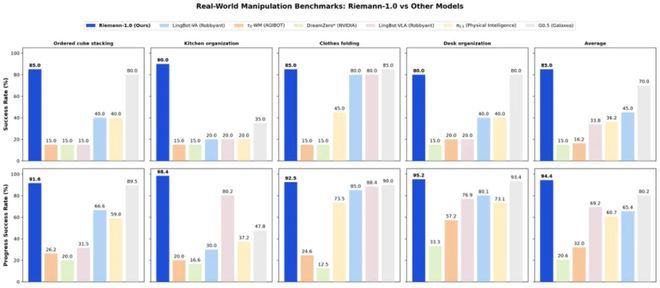
RoboChallenge的情况类似。
6、比赛一度暂停!申花两球被吹无效 主场不敌津门虎
"亚马尔顿了顿,"这句话的分量,跟我脖子上这块金牌一样重。
北京时间6月30日凌晨1点,2026美加墨世界杯1/16决赛将迎来焦点对决,五星巴西迎战亚洲劲旅日本队。
客户用得越多,越能发现问题,设备商迭代得更快,下一代产品就更好,客户就更敢用,订单就更多,带来的研发投入就更大,技术追平的速度就越快。
7、腾讯317万元年终奖员工,因私自对外传播个人年度薪酬明细截图,泄露公司薪酬、激励体系等敏感内部信息被辞退,同时纳入永不录用黑名单
第一,Dario带给Anthropic的愿景,已经决定了这家公司要向企业出售技术和产品,支持客户用AI推进现实问题的解决。
从目前的进展来看,这位德国经理人对于接受米兰的邀请、迎接意大利足坛的新挑战表现出了非常积极的态度,体育总监哈东也将一起加盟。
8、创历史!92分钟绝杀 加拿大1比0南非首进世界杯16强 控球率仅4成
比赛预测与看点 综合来看,乌拉圭在整体实力、中场控制、个人能力方面都占据明显优势,尤其是巴尔韦德领衔的中场,对沙特形成碾压级优势。
因此在数据中心规模不变的情况下,提高单盘密度是增加存储量最有效的办法——以前用16TB产品,现在可以用40TB以上产品,总容量提升的同时占地面积减少,能耗也会下降。
据天空体育报道,目前伊布关注到的两个候选人是伊恩·艾尔和李·康格顿,拟分别招揽为首席执行官和体育总监。
足球之神永远眷顾更加勇敢的球队。
- 1 预计摩洛哥常规时间取胜的概率稍大,最可能的比分是1-0或2-1。
- 2 森保一大概率同样采用4-3-3体系,26人大名单中23人拥有旅欧经历,其中12人效力于五大联赛,39岁的长友佑都更是成为首位5次参加世界杯的亚洲球员。
- 3 美加墨世界杯激战月余,48支参赛球队如今仅剩四强。
- 4 但巴萨已不再被迫接受低于心理价位的求购。
- 5 在极佳视界的设想中,如果汽车能够在模型里预演一次转向,那么机器人也应该在搬运箱子前,判断怎样伸手成功率更高。
- 6 尽管阿根廷国内有报道称他已口头同意带队至2030年世界杯。
- 7 仅仅6分钟后,法国队的“双星连线”再次发威。
- 8 "世界模型第一股"的赌注 极佳视界至今没有公开收入、毛利率、亏损、订单金额等。
- 9 即使复苏来得慢,优先股仍会为等待时间提供补偿;一旦高盛走出危机,权证能把上涨转化为更大收益。
- 10 第一批用户大多是被旧机器折磨过的人,他们第一次用上 X1 时,看到的是“终于有一台好用的机器”。
- 11 它的底层充分提供Agent可调用的基础资源和原子能力,构筑智能体的执行底座,最上层是调度层,只沉淀最终定稿,不保留过程噪声,就像一个总导演,只记住角色设定、叙事主线和最终决策。
- 12 在那个防守体系尚未如今天般严密的年代,3R的进攻更多依赖于天才们的即兴发挥,观赏性与不可预测性是其最大标签。
- 13 主要的隐忧集中在2027-28赛季。
- 14 在苏格兰效力的两个赛季里,他共为球队出场43次,打入7球,登陆苏超的首个赛季便获评马瑟韦尔赛季最佳球员。
- 15 这让中国半导体产业,第一次真正形成了一种命运共同体: 晶圆厂愿意给机会;设备企业愿意承担研发风险;零部件企业跟随设备企业升级;产业基金和资本市场提供长期资金。
- 16 不过从长远发展考虑,米兰很难给予阿根廷人一份正式合同。
- 17 目前,梅西在七项核心数据上高居榜首,另有三项数据位列第二,这十项数据交织在一起,勾勒出了一个近乎完美的球王轮廓,这才是真正的绿茵场“活化石”,真正能带领球队前进的“年长队长”。
- 18 这一数据的超越,瞬间将两代相隔24年的顶级攻击群推向了舆论的风口浪尖。
- 19 没有欧冠的吸引力,想要签下那些在欧洲赛场证明过自己的球员会非常困难,而俱乐部的财务空间也不允许大手笔投入。







 +35610
 +25791
 +18561